
Renovation and restoration of the building: the exterior and interior envelope (the lobby) will enhance the building’s aesthetic appearance, improve residents’ quality of life, and increase the value of the apartments.
Many buildings with an outdated appearance, which are not properly maintained, stand in the heart of residential neighborhoods. The look of old and neglected buildings harms the neighborhood’s appearance and even lowers the value of the apartments in the area.
In addition to being an aesthetic issue, buildings that are not properly maintained and have not undergone renovation and/or reinforcement can pose an environmental hazard.
Wear and tear on the exterior envelope exposes the building to water infiltration, leaks, crumbling walls, and mold, affecting not only the building’s appearance but also its structural strength and the residents’ health. Peeling paint and plaster, falling stones, cracks, and exposed concrete pose a danger.
Tangible.
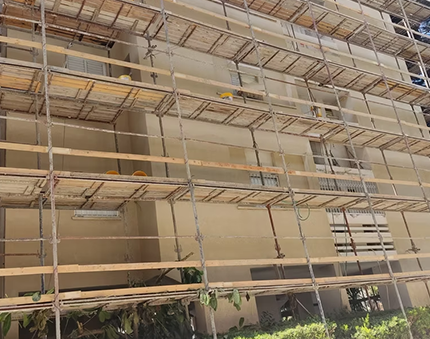
A company of professional and experienced contractors, engineers, architects, and structural engineers whose role is to assess feasibility and present alternatives according to the on-site conditions and the residents’ unique needs.
We will help you choose the balcony type that suits you best.
There are two main reasons for renovating buildings.
Renovation for safety reasons:
Often, when a building is not properly maintained, municipalities and local authorities intervene and require the building to be reinforced according to the law and at the request of the city engineer.
At the stage when authorities need to intervene, residents are required to carry out a comprehensive and complete renovation, with no option to postpone the process.
Residents’ attention to defects and prompt action by the committee can prevent intervention by the local authorities.
Here are some examples of identifying safety defects:
Exposed columns and beams, damaged and peeling concrete, exposed rebar, structural cracks, crumbling ceilings and walls, and more.
This type of renovation is critical for the stability and reinforcement of the building and for preventing deterioration and wear that could compromise the building’s integrity.
Renovation for aesthetic reasons and the desire to refresh the building’s appearance:
Old buildings can significantly improve the appearance of the structure and its surroundings, while also preventing weather damage and wear.
A building that is not renovated and properly maintained periodically will continue to age, which may lead to more significant and costly maintenance in the future.
Improving the building’s exterior appearance and the common residential areas significantly enhances the residents’ quality of life, increases the value of the apartments, and attracts potential buyers and renters.
Here are some examples that require maintenance:
A worn-out building, faded and dirty paint, rust, dampness, wear and tear, broken flooring, and faulty insulation and sealing.
To make a joint decision to carry out external renovation of a building, a residents’ meeting must be held according to the shared building protocol, and a legal vote must be conducted. If the renovation is aimed at preserving the current state or restoring it to its original condition, without any additions or changes to the finishing materials, a “regular” majority of 51% or more of the apartment owners is required, and this majority has the authority to obligate all apartment owners to bear the cost of the renovation.
If the renovation is “more expensive” and includes additions and/or changes to the finishing materials, a majority of 75% or more of the apartment owners is required.
In this case, the opposing apartment owners will be required to pay the amount corresponding to restoring the building to its current condition, while the supporting apartment owners will cover the difference for the renovation (these differences are usually not significant).